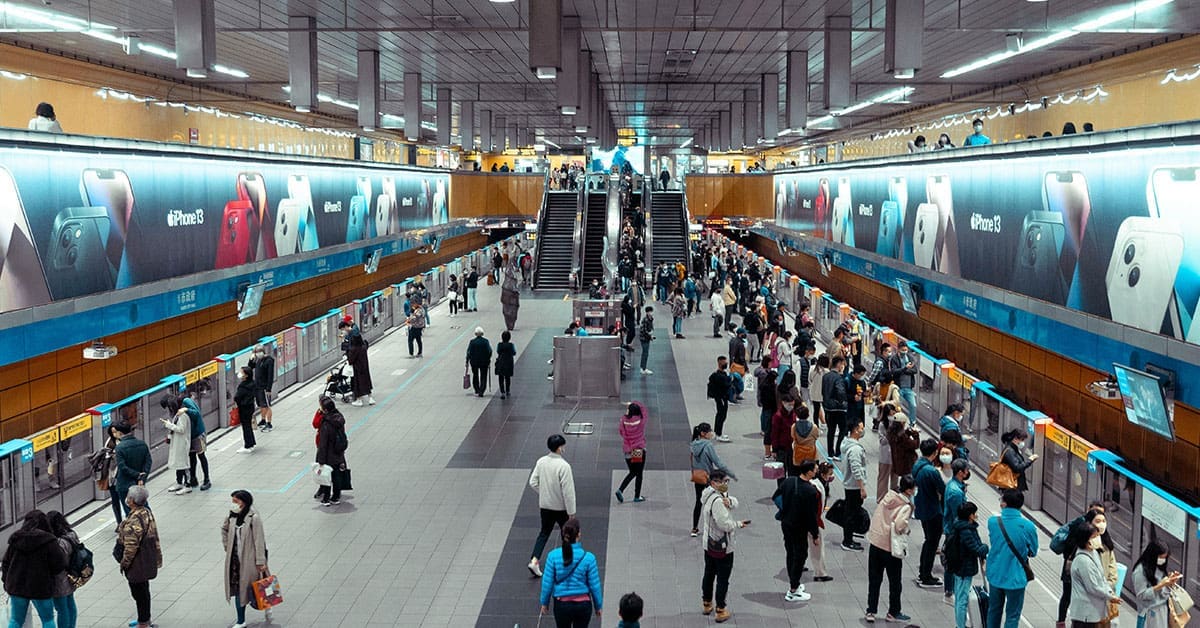
With 47% of commuters recalling ads they’ve seen in transit waiting areas, and 42% remembering ads from their primary mode of transport, transit advertising gives brands a genuine shot at getting noticed and actually remembered. Here’s a look at the latest trends shaping transit advertising, from technology to sustainability to shifting consumer behaviour.
Current Trends in Transit Advertising
Rise of Digital Displays in Public Transport
As public transport grows more sophisticated, so does transit advertising, opening up more ways for brands to reach new audiences. In recent years, digital signage has become one of the most effective ways to engage commuters during their daily trip.
Compared to traditional advertising, digital displays give brands more room to build in interactive elements, creating a more engaging, memorable experience for anyone who sees it.
One of the biggest advantages of digital displays is the ability to target specific audiences with personalised content. Brands can program ads to shift based on time of day, location, weather, or even the demographics of passengers at a given stop.
The Shift Towards Interactive Advertising
Interactive advertising differs from its traditional counterpart by encouraging genuine engagement rather than passive viewing. This style of advertising tends to be the most memorable and effective at standing out and actually sticking in people’s minds.
Building interactive elements into your ads can be as simple as adding a QR code customers can scan for more information or exclusive offers. It also helps bridge the gap between offline and online advertising, creating a more seamless experience for the viewer.
Understanding Consumer Behaviour in Outdoor Advertising
Influence of Location on Consumer Engagement
It’s not just the ad itself that matters, where you place it counts just as much. Urban and rural areas each offer their own advantages for reaching specific audiences. Densely populated urban areas put your brand in front of a broad demographic mix, while rural areas can offer a more attentive, focused audience.
If you run a physical store and rely on in-person sales, the proximity of your billboard to your business genuinely matters. If you’re building brand awareness or reaching new customers more broadly, your billboard doesn’t need to sit right next to your location.
If local foot traffic is the goal though, placing your billboard closer to your store is the smarter move.
How Demographics Shape Transit Ad Effectiveness
While outdoor advertising exposes your brand to a wide demographic mix, some groups engage with it more than others. Torchmedia reports that millennials and Gen Z notice transit ads on trains, light rails, and at stations more than the average Australian.
The largest group reporting they notice transit ads sits between 18 and 39 years old. To reach the right people with the right campaign, segmenting your audience is essential.
That means dividing your audience into specific groups based on demographics, interests, behaviour, and other relevant factors, then tailoring your ads to resonate with each segment individually.
Innovations Driving the Future of Transit Advertising
The Role of Technology in Bus Advertising
Technology has genuinely transformed bus advertising, making it more dynamic, engaging, and effective than ever. Static ads have given way to eye-catching digital billboards capable of rotating multiple ads, targeting specific audiences, and updating content in real time.
Advances like GPS tracking and mobile integration have made targeting even more precise. Bus ads can now adapt to local context, shifting based on the bus’s geographic location or the time of day to create a genuinely personalised experience for commuters.
It’s not just ads on the buses themselves getting smarter either, bus shelter advertising now has digital options too. Digital shelter ads can update in real time or include interactive elements to engage commuters while they wait.
Sustainable Practices in Outdoor Advertising
Sustainability has become an increasingly important focus in outdoor advertising in recent years. Traditional formats like billboards, posters, and vinyl banners consume significant energy during production, and the materials used in printing can harm the environment if not disposed of properly.
To help offset this, brands can choose eco-friendly materials, ones made from recycled content, or that are easily recycled after use.
For eco-conscious brands, digital billboards are also worth considering. They’re a more sustainable option than traditional billboards, skipping physical materials like PVC vinyl and printer ink that can harm the environment.
Digital billboards still consume energy, of course, but options like solar-powered displays and LED lighting help maximise their efficiency.
Ready to discover the power of transit advertising by partnering with an agency that genuinely understands how to leverage the latest trends? Get in touch with us at hello@omdigigroup.com to get started!