
Ads on the Google Display Network reach over 90% of the global internet population, which makes it clear why Google Display Ads are such a powerful way to increase your brand’s visibility and reach your target audience. Here’s how to set a realistic budget and build a Google Display Ad campaign that actually drives results.
Determining the Fit for Your Budget
Setting a Realistic Budget
The right Google Ads budget depends on your marketing goals, your overall marketing budget, and the average value of each sale. If you’re new to Google Ads, running test campaigns can be a smart way to see what actually works. There’s a risk you won’t turn a profit right away, but the process still gives you valuable insight for shaping your broader digital marketing strategy.
The first step is deciding which keywords you want to target and how much you’re willing to pay per click, known as your keyword’s maximum cost-per-click (CPC).
Choose keywords that are genuinely relevant to your business, and weigh up their competitiveness against their potential ROI, and you can allocate your budget far more effectively. This kind of strategic approach doesn’t just keep costs in check, it also makes sure your ads reach the right audience, moving you closer to your marketing goals.
Calculating ROI Potential
Your Return on Investment (ROI) measures how much you earned from your ads compared to how much you spent. It’s a metric worth tracking closely, since it tells you whether your campaign is turning a profit and how individual ads are actually performing.
If an ad is delivering a high ROI, it might be worth shifting more of your budget toward it. If another ad isn’t hitting a good ROI, you can pause it or optimise it to try and improve results.
Before you can identify your ROI, you’ll need to measure conversions. Conversions are the customer actions you actually want, filling out a form, signing up for a newsletter, or making a purchase.
Once conversion tracking is switched on, you can evaluate your ROI. Start with the revenue from your ads and listings, subtract your overall costs, then divide by your overall costs. The formula looks like this:
ROI = (Revenue – Costs) / Costs
Average ROIs vary depending on your industry, advertising strategy, and campaign goals. Google estimates that businesses typically make $2 for every $1 spent, an ROI of 100%.
Crafting an Effective Google Display Ads Strategy
Keyword Research and Selection
Before picking keywords for your Display Ads, Google recommends organising your ad groups around the products or services you offer. From there, start brainstorming keywords tied to each one.
Aim for 5 to 20 keywords per ad group. Two to three-word phrases tend to perform best, and Google recommends grouping keywords that relate closely to each other. If your brand is well-known, including branded keywords is worth doing too.
Make use of keyword tools while you’re at it. Enter your main topics and you’ll get a list of related keywords along with their search volumes, which is also a good moment to double-check whether the keywords you came up with earlier are actually worth the investment. There’s no shortage of tools to choose from, Google’s own Keyword Planner, SEMRush, and Ahrefs are all solid options.
Ad Creative and Design Guidelines
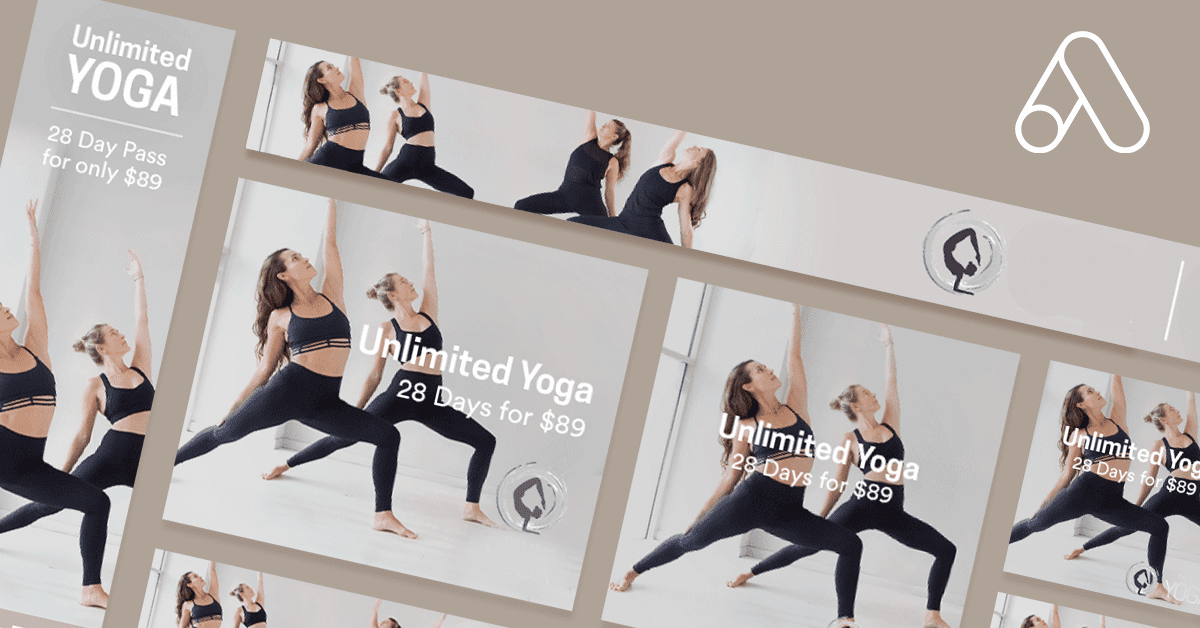
With the average attention span on a screen sitting at just 47 seconds, you don’t have long to make an impression. That’s exactly why your Google Display Ad creatives should stay simple and engaging. A single, high-quality image tends to work better than several competing ones, which can make an ad feel cluttered.
Colour has a bigger impact on recognition than you’d think, so sticking to your brand colours helps build familiarity fast. Placing your logo somewhere prominent helps too, making sure viewers know it’s you at a glance. To keep the focus on your brand, avoid overloading the ad with blank space.
That said, don’t write off blank space entirely. Used well, it actually helps your visuals and text stand out rather than compete for attention. Your font matters too. Overly complex fonts can be hard to read and pull focus away from your offer, so stick to something clean, Arial, Helvetica, Verdana, and Georgia are all reliable choices.
If you want to figure out what resonates best with your audience, A/B testing is worth the effort. It means comparing two versions of an ad to see which one performs better, letting you test elements like the headline, colours, CTA, and images to find the combination that gets the highest click-through rate.
If you need a hand maximising your results with Google Display Ads, our team of Google Ads experts at OMDIGI Group is here to help you build a campaign that delivers. Combining winning strategies with sharp campaign management, OMDIGI Group is your go-to PPC marketing agency. Get in contact with us at hello@omdigigroup.com to find out more!